Studio Notes — 5 March 2026
Building a Site Without a Template
On the decision to hand-code augustra.com, and what the constraint of doing it yourself teaches about design.
Contents
Every template carries a worldview. The templates that dominate web publishing — the CMS themes, the no-code platforms, the drag-and-drop builders — are not neutral containers. They are arguments, made in advance by people you have never met, about what a publication should look like, how it should be structured, what kinds of content it can hold. When you use a template, you inherit those arguments. Often you do not know you have inherited them until you try to do something they have not anticipated.
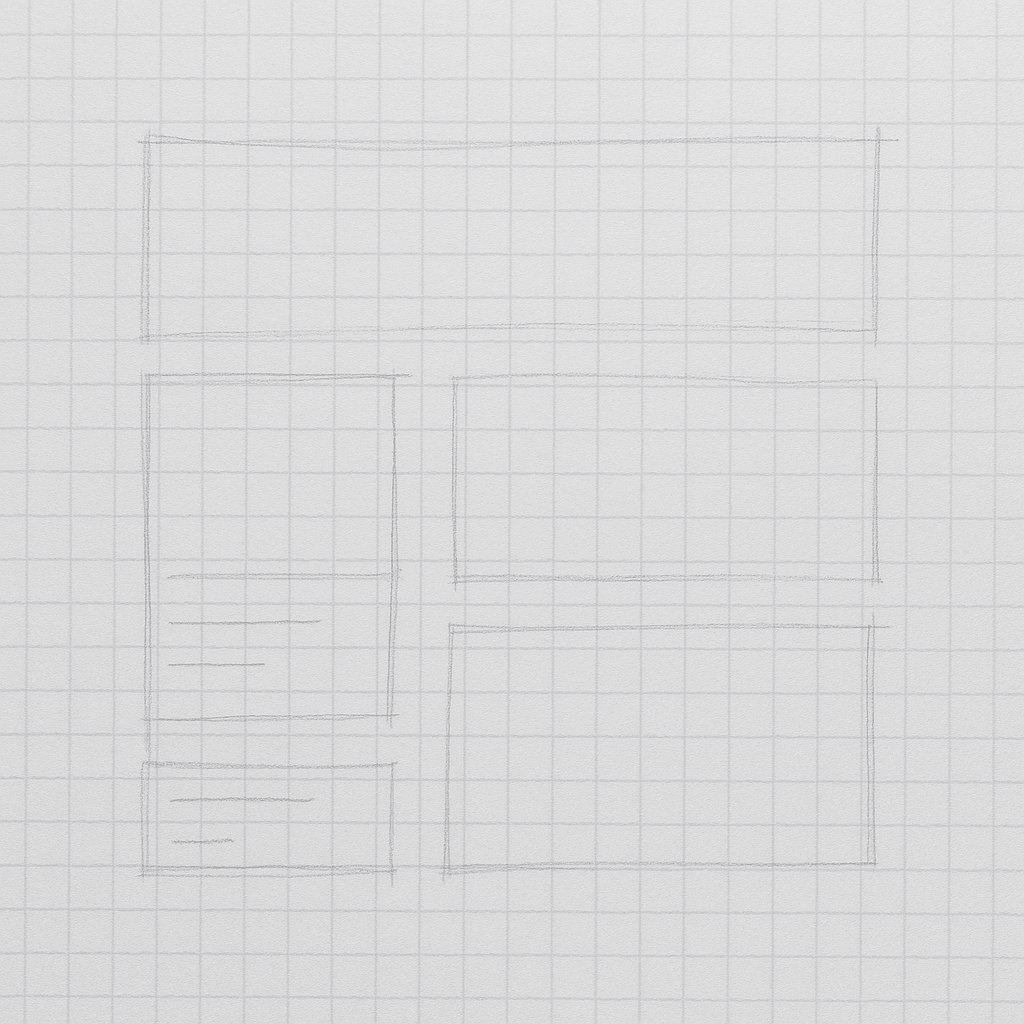
We built this site by hand. Not because hand-coding is inherently superior, or because there is virtue in difficulty for its own sake, but because the things we wanted to do were specific enough that the template route would have been a sustained negotiation — working around assumptions, overriding defaults, gradually replacing the template's logic with our own until it was unclear what we were using the template for.
What You Learn by Building
Writing CSS is, in a strange way, a design practice. Every property you set is a decision: this amount of space, this weight of border, this threshold at which the layout collapses to mobile. You cannot defer these decisions to a default — or rather, you can, but the defaults are someone else's decisions, and they show. The difference between a site that feels designed and one that feels assembled is often the difference between someone who made conscious choices about spacing and someone who accepted the template's spacing and moved on.
The constraint of doing it yourself is also the constraint of having to understand what you want before you can build it. You cannot drag a "feature hero block" onto a canvas and see if it looks right. You have to decide, before you write a line of code, what a feature hero block is doing on this site, whether it is the right thing, and what it would look like if it were right. This is harder. It is also better design practice.
The constraint of building from scratch is the constraint of having to know what you want before you can make it.
The Maintenance Argument
The counterargument to hand-coded sites is maintenance: the no-code platform takes care of security updates, browser compatibility, responsive behaviour. This is a real argument. But it assumes the goal is a site that stays the same — that once built, simply continues to work. For a publication that is, in part, about the thinking behind its own construction, the ability to make small adjustments easily, to refine a spacing decision or revisit a typographic choice, is part of the practice. A template makes that harder, not easier, because the adjustments have to work within someone else's structure.
We will rebuild parts of this site as we learn what it needs to be. The code is not precious. But it is ours, and the decisions inside it are conscious ones, made for reasons we can explain. That feels important for a publication that asks the same of its writing.